Thursday, April 30, 2026

Silver Parachute


We are probably all familiar with the Silver Parachutes from Suzanne Collin's The Hunger Games.

The parachutes are small, drone-like devices used by sponsors to deliver essential, high-cost gifts (food, medicine, weapons) to tributes in the arena. These parachutes symbolize sponsor favor and are crucial for survival. They are considered last-minute, unforeseen gifts.  


    Post-war Germany was divided into three sections--the Allied part was controlled by the United States, Great Britain, and France, and another part by the Soviet Union. The city of Berlin, although located in the eastern Soviet half, was also divided into four sectors -West Berlin occupied by Allied interests and East Berlin occupied by the Soviets. In June 1948, the Soviet Union attempted to control all of Berlin by cutting surface traffic to and from the city of West Berlin. Starving out the population and cutting off their business was their method of gaining control. 

    The Marshall Plan was a U.S.-led initiative that provided over $13 billion ($143 billion in 2017 dollars) in economic assistance to 16 Western European nations, proposed by Secretary of State George Marshall. It aimed to rebuild war-torn economies, curb the spread of communism, and foster trade. As part of the Marshall Plan, the Truman administration responded with a daily airlift that brought much-needed food and supplies into the city of West Berlin. The Berlin Airlift lasted until the end of September 1949, although on May 12, 1949, the Soviet government yielded and lifted the blockade.

How did the airlift affect West German attitudes toward the United States and 'contain' the spread of Communism?

Imagine you are a child in Postwar West Berlin.  Write a 'Thank You' like the ones in the story to "Uncle Wiggly Wings."

Wednesday, April 29, 2026

Does the End Justify the Means?


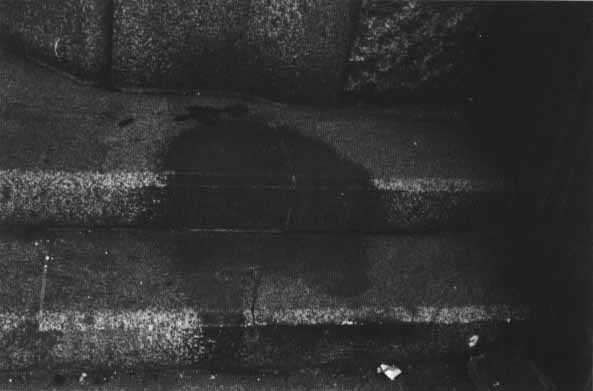
The survivors of the atomic bombing were scarred for life, mentally and physically. No passage of time, however long, can relieve their memories. The scars on their faces, hands, and legs bear witness to that. In the vicissitudes of the last forty years, they must have struggled with recurring memories of their fears. The event at Hiroshima did not end in 1945; but began a new historical era leading toward the twenty-first century. It is certain that Hiroshima still exists in each one of us.

Given that the Atomic Bomb literally vaporized thousands of people its amazing that anything survived. These items found amidst the ruins of Hiroshima offer a startling reminder of the destructiveness of the bomb; not just on buildings and bridges but on real people.

1) What did you learn from listening to the survivors?

2)Was the attack on Hiroshima a crime against humanity?

3) Does this story change your original opinion about the bomb? Why/ not?

4) How many nuclear attacks have happened since?

5) Why are these stories and images important in preventing future nuclear attacks?

Tuesday, April 28, 2026

Mother Do You Think They'll Drop the Bomb?


The United States government secretly spent billions of dollars on a program code-named the Manhattan Project.  Its highest national priority: developing an atomic bomb.  The project was encouraged by Albert Einstein himself and led by J Robert Oppenheimer.   In a barren desert in New Mexico, on the morning of July 16, 1945,  the bomb was tested.  The flash of light could be seen 180 miles away.

President Truman did not agonize over the decision to drop the atomic bomb on Japan. For the President abstract ethical issues did not outweigh very real American lives and an opportunity to end the war. Later some historians would condemn Truman's decision. What would you have done?

"Little Boy" was the codename for the type of atomic bomb dropped on the Japanese city of Hiroshima on 6 August 1945 by the Boeing B-29 Superfortress Enola Gay, piloted by Colonel Paul W. Tibbets, Jr., commander of the 509th Composite Group of the United States Army Air Forces. It was the first atomic bomb to be used in warfare. TheHiroshima bombing was the second artificial nuclear explosion in history, after the Trinity test, and the first uranium-based detonation. It exploded with an energy of approximately 15 kilotons of TNT (63 TJ). The bomb caused significant destruction to the city of Hiroshima.

Monday, April 27, 2026

Bushido


There are countless stories of the Japanese 'kamakazi' pilots who would rather die themselves than give up. On Iwo Jima, a 5-mile-long desolate island rock 650 miles southeast of Tokyo, more than 23,000 marines became casualties.  The fight for Okinawa was even deadlier as many Japanese troops readily killed themselves. The Japanese fought by a code they thought was right: 'Bushido' The way of the Samurai warrior.

 How was this code different from the more Western idea of 'Chivalry?'


 Who would win:  Knight vs. Samurai?

Thursday, April 23, 2026

Word Power

There is no stronger bond of friendship than a mutual enemy.
-Frankfort Moore

At a time when America's best cryptographers were falling short, the Navajo Indians  were able to fashion the most ingenious and successful code in military history. They drew upon their proud warrior tradition to brave the dense jungles of Guadalcanal and the exposed beachheads of Iwo Jima. Serving with distinction in every major engagement of the Pacific theater from 1942-1945, their unbreakable code played a pivotal role in saving countless lives and hastening the war's end.


2) How does is this idea reflected in the mysterious message on the back of our penny?

3) Write your name using the Navajo Code Talker Dictionary.


Tuesday, April 21, 2026

Fighting WWII


Throughout 1943 the leaders of the Allied Forces squabbled over when they would start a second front in France.  Up to that point Soviet troops had done most of the fighting in Europe.  At the historic meeting of the 'Big 3' in Tehran, Stalin had insisted that Britain and the United States carry more of the military burden by attacking Germany in the west.


General Dwight D. Eisenhower was promoted over 350 other more qualified generals to lead the operation.  He  called the operation a crusade in which “we will accept nothing less than full victory.” More than 5,000 Ships and 13,000 aircraft supported the D-Day invasion, and by day’s end on June 6, the Allies gained a foot- hold in Europe. The D-Day cost was high -more than 9,000 Allied Soldiers were killed or wounded -- but more than 100,000 Soldiers began the march across Europe to defeat Hitler.


Monday, April 20, 2026

Rationing


After the shock of Pearl Harbor many Americans wondered what would happen next?
Everyone would have to make sacrifices in support of the Armed Forces.  This included accepting 
Rationing:  a system of limiting the distribution of food, gasoline, and other goods so the military could have the equipment and supplies it needed.

What challenges and hardships did 'rationing' create?  

Did everyone accept it willingly?  Why was it necessary?


'Prices Unlimited 1944'

Thursday, April 16, 2026

Go for Broke!


The motto of the 442nd Regimental Combat Team was “go for broke.” It’s a gambling term that means risking everything on one great effort to win big. The soldiers of the 442nd needed to win big. They were Nisei - American-born sons of Japanese immigrants. They fought two wars: the Germans in Europe and the prejudice in America.

1) Who were the ‘Nisei?’ 

 2) What was the motto of the 442nd? What did it mean? 

 3) How were the ‘Buddhaheads’ different from the ‘Katonks?’ What was the origin of these nicknames? 


Tuesday, April 14, 2026

The Face of the Enemy?

While many groups of Americans faced hardships during WWII, none had it harder than Japanese Americans.

After the attacks on Pearl Harbor Americans were understandably fearful of further attacks and spies. In early 1942, by Presidential executive order 9066, Japanese-Americans living primarily on the west coast were taken to internment camps as a security measure following the massive Pearl Harbor raid that temporarily incapacitated the Pacific fleet. A national sense of outrage consumed Americans. Strangers on the streets looked at one another with a new awareness.

The US Government claimed internment camps were vital to American security and that every effort was made to provide for their Japanese guests.

Compare the Government claims to actual photos of the camps taken from Ansel Adams famous book Born Free and Equal.

Watch this video to see what life in the camps was really like.

Listen to the song Kenji by Fort Minor.

1) Were American fears justified?
2) Can you tell who the enemy is just by looking at them?
3) Why weren't German's and Italians also sent to 'camps?'
4) Did all Japanese Americans go willingly? Who was Fred Korematsu?
5) What lessons did we learn from this mistake?
6) Did the United States ever apologize?

Friday, April 10, 2026

Doris Miller


In 1941, Miller was a 22-year-old mess attendant on the USS West Virginia. At the time, black sailors were consigned to roles in the messman branch — work that entailed swabbing decks, cooking and shining officers' shoes.

He had awoken at 6 a.m. and was collecting laundry when the Japanese attack began and an alarm sounded on the ship, according to the Navy. Miller headed to the antiaircraft battery magazine, but it had already been destroyed by torpedo damage. He proceeded to the deck, where he was assigned to carry his wounded comrades, including the ship's captain. Miller was strong: a former high school football player in Waco, Texas, he was the ship's heavyweight boxing champion.

"Miller went topside, carried wounded on his shoulders, made several trips up and down, wading through waist-deep water, oil-slicked decks, struggling uphill on slick decks," Navy Rear Adm. John Fuller said in 2016.

The young sailor then took over a .50-caliber anti-aircraft machine gun and fired it until the ammunition ran out. No matter that he'd never been trained on the weapon.


Thursday, April 9, 2026

Days Of Infamy


Like Pearl Harbor, the attacks on 9/11/01 forever changed us as a country. Not since December 7, 1941 had our nation suffered such a devastating defeat by a foreign power on our own soil. In the days after 9/11 comparisons to Pearl Harbor were frequently made. Both attacks resulted in a spirit of American unity. A common enemy was identified. A national government galvanized American energies to combat and destroy the forces that attacked the homeland.

Two years ago the US surgeon general described the upcoming grim period of the coronavirus pandemic in the United States as a "Pearl Harbor moment" and a "9/11 moment.

Do you agree?  Why or why not?


Tuesday, April 7, 2026

Interstellar Dust Bowl

In “Interstellar,” humanity is endangered by a blight that is gradually eliminating the number of crops that are viable on Earth. The world economy and national governments have shrunk dramatically. Drones race through Midwestern skies, abandoned by the intelligence programs that set them aloft, and crash into fields where they are scavenged by entrepreneurial farmers like Cooper (Matthew McConaughey), a former pilot who still dreams of flying. Violent dust storms, straight out of documentary footage of Dust Bowl storms, rise like mountains in the skies, and the particles fill children’s lungs, killing them. If it is not made explicit that the disaster is man-made, the use of testimony from actual Dust Bowl survivors  does. 

“This really happened. It’s just a question of could it happen on a global scale, or in such a way that our existence on the planet would be imperiled?"